The tool
Nelson's encapsulated paint pellet and the CO₂-powered pistols built to fire it — first Crosman's 707, then Daisy's Nel-Spot 007.
A Michigan paint man built a gun so foresters could tag timber from a distance. Thirty years later, twelve men took it into the New Hampshire woods to settle an argument — and accidentally invented a sport played in more than forty countries.

In the years after the Second World War, foresters had a tedious job: walking into a stand of timber and painting a mark on every tree slated for cutting. It meant reaching each trunk on foot, through brush, in weather, with a brush or a spray can.
Charles Nelson — whose family firm, the Nelson Paint Company of Kingsford, Michigan, had been founded in 1940 — took the problem apart from the paint side. If the paint could be sealed inside a capsule, and the capsule could be fired, the forester could mark a tree from thirty yards away without leaving the trail.
The full storyThe sport has a documented beginning, a documented first game, and a documented first company. Here is how the pieces fit together.
Nelson's encapsulated paint pellet and the CO₂-powered pistols built to fire it — first Crosman's 707, then Daisy's Nel-Spot 007.
Foresters marking timber, rangers marking boundaries, cattlemen and wildlife managers tagging livestock and game from a safe distance.
Twelve men, one hundred acres of New Hampshire forest, four flags, and an argument about whether a city man could survive in the woods.
Bob Gurnsey's National Survival Game licensed fields and sold kits — turning a weekend bet into a franchise business and, eventually, a global sport.

The 1990s were paintball's growth decade. Semi-automatic markers replaced pump guns, gravity-fed hoppers replaced ten-round tubes, compressed air began to displace CO₂, and organized leagues built a competitive structure on top of what had been a weekend pastime.
In 1995 ESPN broadcast the World Cup — the first time a major network carried paintball. Fields opened across Europe, Asia, and Australia. What had been a twelve-man experiment in the woods became a sport with divisions, sponsors, professional teams, and a rulebook.
The 1990s boom
From oil-based enamel in a horse-pill capsule to today's water-soluble, biodegradable, food-grade fill.
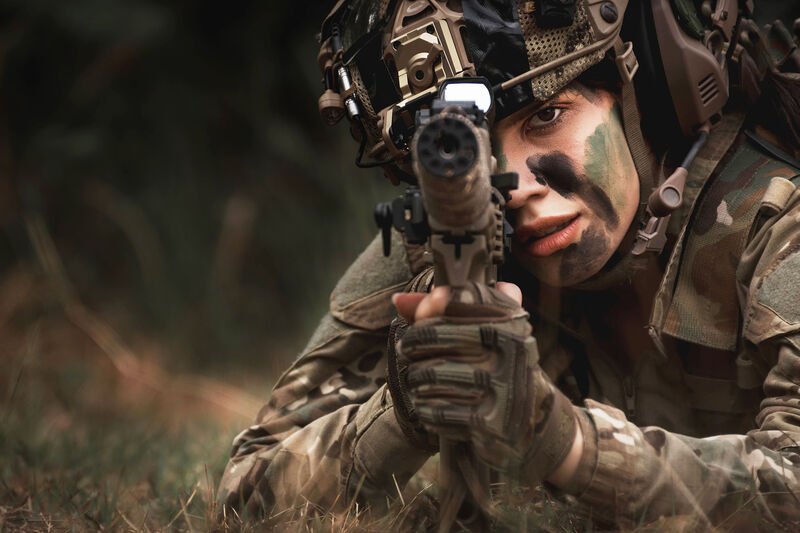
Eliminations, hit calls, masks-on discipline, velocity limits, surrender rules, and the common game formats.
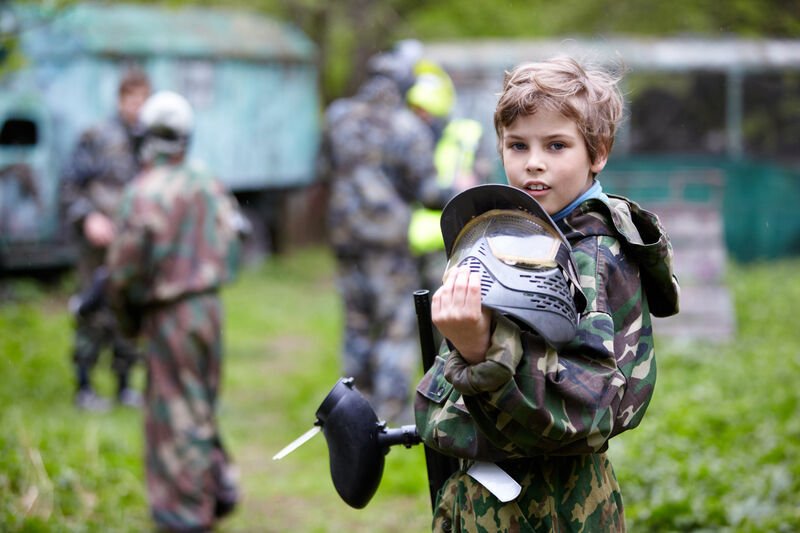
Markers, masks, air systems, barrel blocks — and why paintball's injury record is better than most people expect.
The full narrative — Nelson, the rangers and cattlemen, the Nel-Spot 007, Henniker, Gurnsey, and the golden age — with an interactive timeline.